
Every new enquiry feels like an opportunity, but not every lead is ready to become a customer.
Many sales teams spend hours following up with every enquiry that comes in. Some prospects are genuinely interested, while others are simply browsing, comparing options, or not ready to make a decision.
Treating every lead the same often results in wasted time, slower responses to qualified prospects, and missed sales opportunities.
Lead scoring helps businesses focus their efforts where they matter most.
1. Not Every Lead Has the Same Value
Imagine receiving 100 enquiries in a week.
Some prospects:
- Request a product demo.
- Ask for pricing.
- Visit your website multiple times.
- Open every marketing email.
Others:
- Download a brochure.
- Fill out a contact form with limited information.
- Never respond to follow-up emails.
Although both groups are considered leads, their level of interest is very different. Without lead scoring, sales teams often spend equal time on both.
2. Sales Teams Lose Valuable Time
Following up with every lead in the same way creates unnecessary work.
Sales representatives may spend hours contacting prospects who have little intention of buying, while highly interested customers wait for a response.
Over time, this reduces productivity and affects overall sales performance.
A better approach is to identify which leads deserve immediate attention.
3. Marketing and Sales Need Better Alignment
Marketing teams generate leads through websites, social media, email campaigns, advertisements, and events.
Sales teams are responsible for converting those leads into customers.
Without a clear way to prioritize enquiries, both teams may have different opinions about which prospects are most valuable.
Lead scoring creates a shared system for identifying sales-ready leads based on customer behavior and engagement.
4. Faster Decisions Lead to Better Results
When sales representatives know which prospects are most likely to convert, they can respond faster with personalized communication.
Instead of reviewing every enquiry manually, they can focus on the opportunities with the highest potential.
This improves customer experience while increasing the likelihood of closing deals.
5. Business Growth Requires Smarter Prioritization
As businesses grow, the number of enquiries also increases.
Managing hundreds of leads manually becomes difficult.
Lead scoring provides a structured way to rank opportunities, helping teams scale their sales process without losing visibility or consistency.
How ProNxt Lead Scoring Helps Your Business
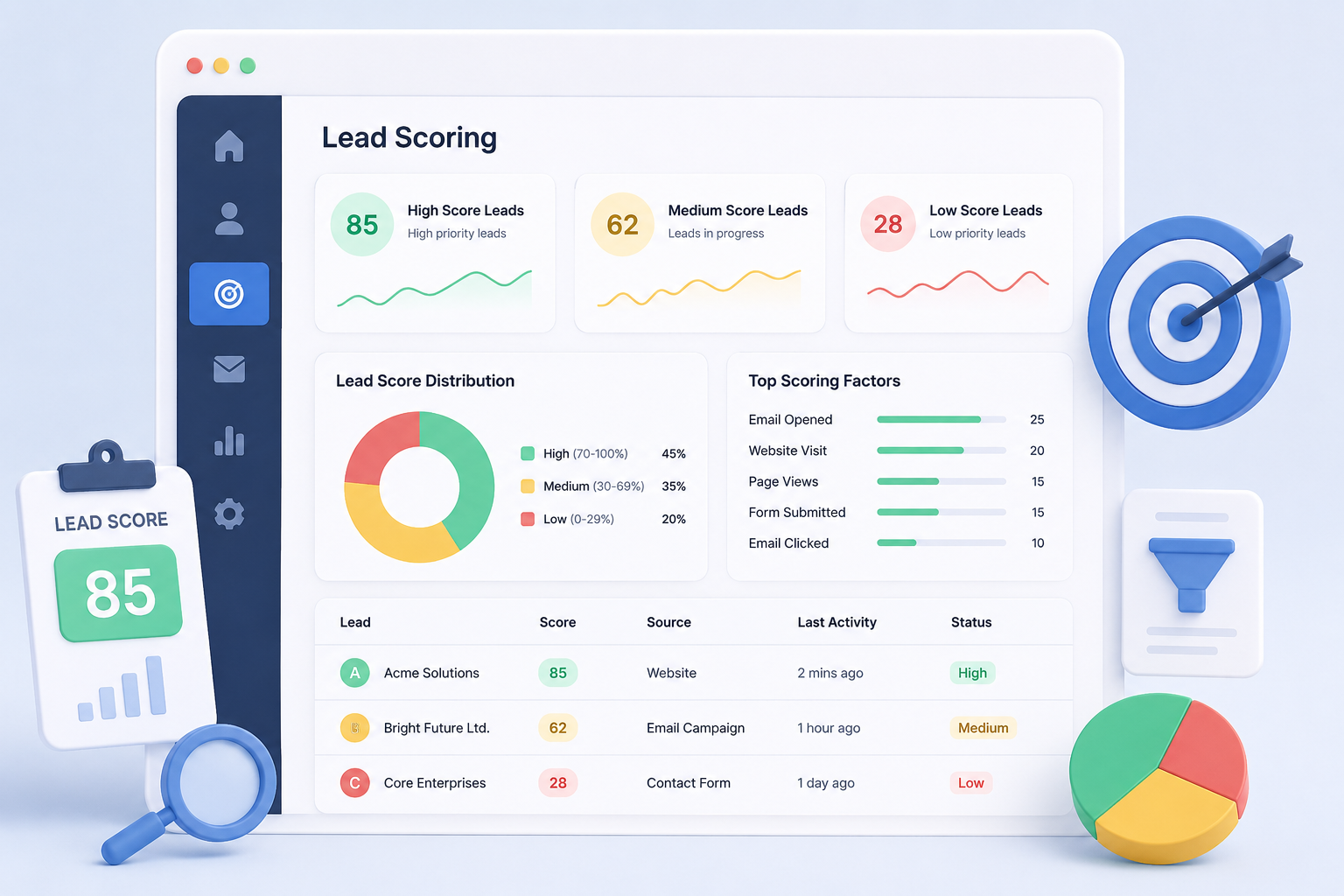
ProNxt helps businesses prioritize leads by assigning scores based on customer engagement and predefined criteria.
With ProNxt, you can:
- Automatically score incoming leads.
- Identify high-priority prospects.
- Focus sales efforts on qualified opportunities.
- Reduce time spent on low-quality enquiries.
- Improve collaboration between marketing and sales teams.
- Track lead activity from the first interaction.
- Build a more predictable sales process.
Instead of guessing which prospect to contact next, your team can make decisions using clear, organized data.
Signs Your Business Needs Lead Scoring
Your business may benefit from lead scoring if:
- Every lead receives the same follow-up.
- Sales representatives spend too much time qualifying prospects.
- Marketing generates more leads than the sales team can manage.
- High-quality opportunities are often missed.
- Sales conversion rates remain inconsistent.
- Teams disagree about which leads deserve priority.
If these situations sound familiar, lead scoring can help your business improve efficiency and focus on opportunities that are more likely to convert.
Final Thoughts
Generating leads is an important part of business growth, but success depends on knowing which opportunities deserve immediate attention.
Lead scoring helps businesses prioritize prospects, improve response times, and use sales resources more effectively.
By focusing on high-quality leads instead of every enquiry, businesses can create a more efficient sales process and improve conversion rates over time.
FAQs
1. What is lead scoring?
Lead scoring is the process of assigning values to leads based on their behavior, engagement, and likelihood of becoming customers.
2. Why is lead scoring important?
It helps sales teams prioritize qualified prospects, improve productivity, and increase conversion rates.
3. How does lead scoring improve sales?
By focusing sales efforts on high-potential leads, businesses reduce wasted time and respond faster to prospects who are ready to buy.
4. Can small businesses benefit from lead scoring?
Yes. Lead scoring helps businesses of all sizes organize enquiries and focus on the highest-potential opportunities.
5. Does ProNxt automate lead scoring?
Yes. ProNxt helps businesses assign scores based on predefined criteria and customer engagement.
6. Can marketing and sales teams use lead scoring together?
Yes. Lead scoring creates a shared framework that helps both teams identify sales-ready prospects.
7. What information can be used for lead scoring?
Businesses can score leads based on factors such as enquiry source, customer interactions, website activity, email engagement, and other qualifying criteria.
8. Does lead scoring replace manual qualification?
No. It helps sales teams prioritize leads more efficiently while still allowing human judgment during the sales process.
9. Which industries can use ProNxt Lead Scoring?
ProNxt is suitable for startups, agencies, manufacturers, healthcare providers, educational institutions, service businesses, and other growing organizations.